
1. Industry Overview: Common Pitfalls in Smart Fertigation Equipment Procurement
With the rapid global adoption of smart agriculture, intelligent fertigation systems have become essential equipment for large-scale farms, greenhouse bases, and commercial orchards, driving substantial growth in agricultural equipment procurement markets. However, the current industry is flooded with equipment of uneven quality and vastly different price points. Global purchasers frequently fall into selection traps: prioritizing low prices over comprehensive performance, judging equipment merely by superficial parameters, and ignoring core hardware quality and long-term maintenance costs.
These improper choices often lead to high equipment failure rates, insufficient irrigation precision, and poor scenario adaptability. Consequently, purchasers fail to implement effective smart irrigation solutions, face unnecessary capital waste and crop yield losses, and ultimately suffer reduced ROI. Most novice buyers encounter three typical pitfalls: confusing entry-level devices with industrial-grade systems, overlooking scenario compatibility, and focusing solely on upfront costs while neglecting long-term hidden expenses including sensor replacement, pipeline blockage troubleshooting, and software malfunctions. For cross-border and bulk purchasers, standardized and scientific fertigation system selection is critical to cost control, yield guarantee, and investment value optimization.
2. Four Core Dimensions for Cost-effective System Selection
The true value of premium smart fertigation systems lies in stability, precision, durability, and low maintenance, rather than redundant fancy functions. Based on global field application experience, purchasers can avoid mainstream procurement risks by evaluating equipment from four decisive dimensions: filtration systems, fertilizer injection channels, sensor precision, and software usability.
2.1 Filtration System: The First Line of Defense for Long-term Stable Operation
Field irrigation water sources such as river water, well water, and channel water usually contain sediment, suspended solids, and diverse impurities. Low-end devices equipped with simplistic filtration structures frequently suffer from pipeline blockages, pump abrasion, and nozzle clogging, which are the leading causes of frequent equipment failures. Most budget models only adopt single-layer simple filters with low precision and no self-cleaning function, resulting in unsmooth water and fertilizer delivery and unbalanced ratio within a short service period.
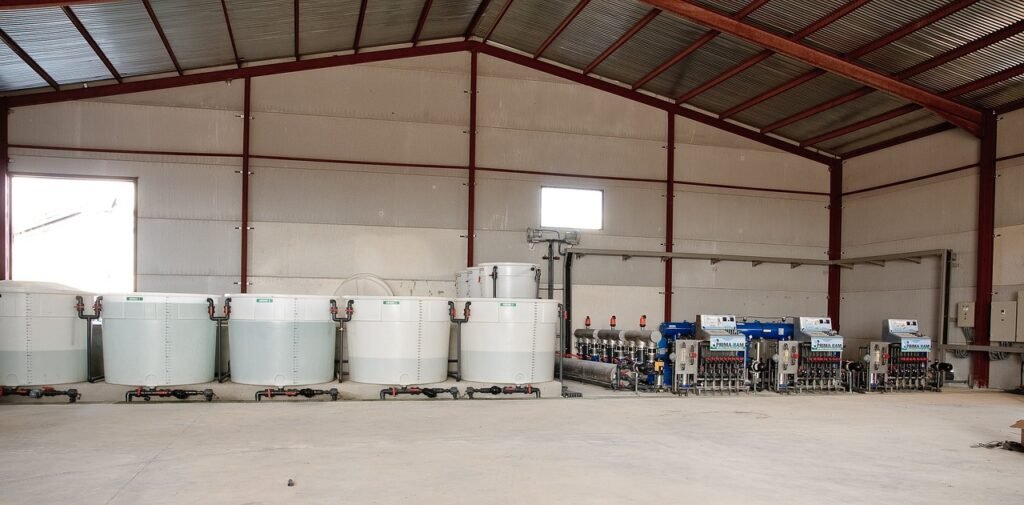
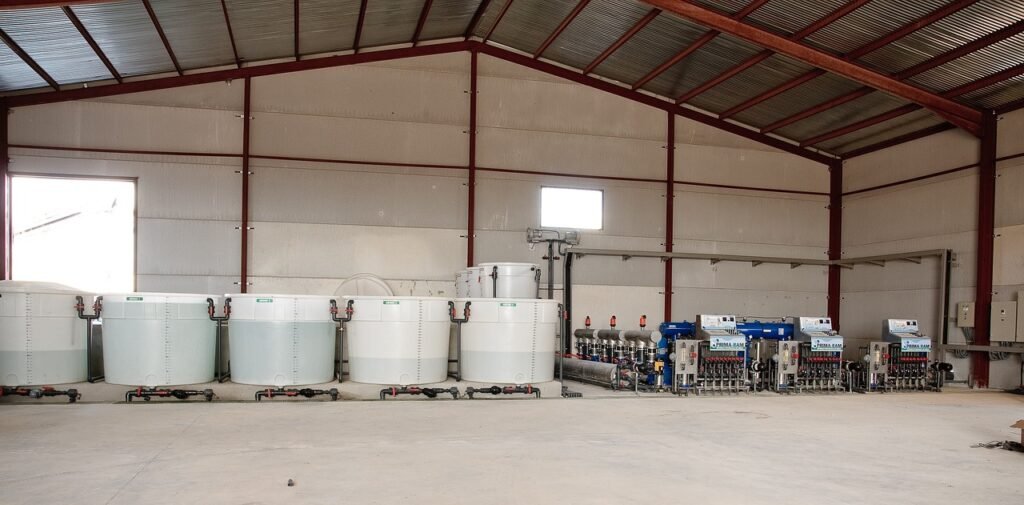
High-quality cost-effective fertigation systems are equipped with multi-stage precision filtration systems with automatic dirt discharge and self-cleaning functions, adapting to complex water quality conditions across global regions. The high-precision filtration components effectively intercept impurities, protecting fertilizer pumps, sensors, and pipeline systems from damage, and significantly reducing failure rates and long-term maintenance costs. For purchasers, a reliable filtration system minimizes hidden expenses on after-sales repairs and accessory replacements, delivering superior long-term cost performance compared with low-spec devices.
2.2 Injection Channel: Core Hardware Determining Fertigation Precision
The accuracy of water and fertilizer mixing directly influences irrigation effects and crop yields, and the structural design and hardware quality of injection channels serve as the foundation of precise fertigation. Most low-cost devices adopt single-channel injection design, which suffers from uneven fertilization, unstable flow rate, and delayed adjustment, failing to meet the refined planting requirements of cash crops and high-standard greenhouses.
Professional-grade fertigation systems adopt independent multi-channel injection design, enabling separate adjustment of flow rate and concentration for each channel. It supports synchronous and precise proportioning of nitrogen, phosphorus, potassium, medium and trace elements, and acid-base regulators, covering full-scenario smart irrigation solutions for open fields, orchards, and greenhouses. Meanwhile, premium channels are made of anti-corrosion and wear-resistant materials, compatible with various water-soluble fertilizers and acid-base regulators. The structural stability ensures consistent fertigation accuracy, effectively preventing fertilizer damage and uneven crop growth caused by proportioning errors and laying a solid hardware foundation for yield and quality improvement.
2.3 Sensor Accuracy: Data Support for Intelligent Regulation
Sensors act as the perceptual core of fertigation systems, and all intelligent regulation logic relies on real-time sensor data. Low-end universal sensors featured by severe data drift, large errors, and weak anti-interference capability are widely used in cheap devices. Temperature, humidity, and water pressure fluctuations will cause distorted EC and pH data, leading to chaotic fertigation regulation despite automatic operation.
Industrial-grade high-quality fertigation systems are fitted with high-precision, waterproof, anti-corrosion, and anti-interference dedicated sensors. Calibrated before delivery and tested under harsh working conditions, these sensors stably collect real-time data of fertigation concentration, pH value, and soil moisture with minimal errors. Featuring long-term stability, the sensors require infrequent calibration and replacement, greatly reducing maintenance costs. The consistent data accuracy realizes genuine data-driven planting, stabilizes crop productivity, and optimizes overallROI for growers.
2.4 Software Usability: Lowering Operation Threshold and Labor Costs
Many purchasers underestimate the importance of system software. Some devices with qualified hardware are equipped with overly complex back-end systems without multi-language support, requiring professional training for field operators and generating extra labor costs. In addition, low-quality software commonly suffers from stuttering, data delay, remote control failure, and system crashes, severely undermining the stability of unmanned irrigation operations.
Cost-effective smart fertigation devices adopt lightweight and user-friendly intelligent management systems, supporting multi-language switching and dual-terminal control via mobile APP and cloud computer platforms. With intuitive operation logic, farmers can quickly set irrigation schedules and fertigation parameters. The system supports automatic data storage, abnormal alarm, remote debugging, and zonal management, eliminating the need for full-time on-site operation and maintenance and significantly reducing labor thresholds and management costs. For global purchasers, localized and user-friendly software effectively cuts training and after-sales debugging costs and improves project implementation efficiency.
3. Premium Advantages: Standardized Qualifications and Flexible Adaptability
Beyond the four core dimensions, standardized certification qualifications and multi-scenario flexible adaptability are the key benchmarks distinguishing ordinary devices from industrial-grade premium equipment, serving as vital assessment criteria for global cross-border procurement. Reliable high-quality fertigation systems hold complete industry test qualifications and compliance certifications, with performance verified through multiple rounds of working condition simulations. Compliant with the agricultural equipment access standards of different countries and regions worldwide, they eliminate the risk of failure in local implementation and compliance.
Furthermore, premium fertigation systems feature powerful flexible adaptability, enabling customizedsmart irrigation solutions tailored to planting scenarios, crop varieties, and operation scales. They adapt seamlessly to both large-scale open-field farming and refined planting in high-end orchards and greenhouses, compatible with diverse water pressure, water quality, and climate environments. The high universality and reusability maximize equipment investment value and avoid resource waste caused by poor scenario adaptability.
4. Procurement Strategy: Prioritize Long-term ROI Over Low-price Traps
In agricultural equipment procurement, true cost performance lies in minimal comprehensive long-term costs and maximum sustainable returns, rather than merely low upfront prices. Many purchasers blindly cut initial investment by choosing low-spec devices, only to face frequent failures, yield reduction, and soaring maintenance costs in the long run, resulting in far higher total expenditure and severely compromised ROI.
The scientific procurement strategy focuses on comprehensive evaluation of core hardware quality, long-term stability, scenario adaptability, and after-sales support. Although industrial-grade high-quality fertigation systems require slightly higher upfront investment, they deliver prominent advantages including low failure rates, water and fertilizer conservation, labor saving, yield improvement, and low long-term maintenance costs. Capable of rapid cost recovery and sustained profit growth, these systems represent high-cost-performance and high-return agricultural investments, enabling global purchasers to make rational and robust equipment investment decisions.