
Modern commercial agriculture is steadily moving away from traditional labor-intensive, resource-wasting planting methods toward precision, data-driven cultivation. At the core of this agricultural revolution lies fertigation, one of the most practical and transformative technologies for open-field farms, commercial orchards, and protected greenhouses worldwide. By merging irrigation and fertilization into a single automated process, fertigation allows growers to deliver precise amounts of water and nutrients directly to crop root zones. For modern farmers aiming to lower operational costs, stabilize yields, and pursue sustainable planting, understanding fertigation’s definition, core advantages, working principles, and practical limitations is essential. This guide elaborates on key professional knowledge of fertigation, providing a comprehensive reference for global agricultural practitioners.
What is Fertigation?
Fertigation is a modern precision agricultural technology that integrates irrigation and fertilization into one intelligent system. Specifically, it refers to dissolving water-soluble fertilizers, medium and trace element nutrients, and soil conditioners in irrigation water, then transporting the evenly mixed nutrient solution to crop root areas through automated pipeline systems. Unlike traditional farming that separates watering and fertilization with manual operation, fertigation realizes on-demand, quantitative, and timed nutrient supply throughout the entire crop growth cycle.
This technology adapts to almost all commercial planting scenarios, including grain fields, cash crop orchards, vegetable greenhouses, and seedling nurseries. It supports real-time adjustment of solution EC and pH values, enabling standardized and refined farm management. As a foundational technology of smart agriculture, fertigation fundamentally fixes the common problems of traditional planting, such as blind fertilization, uneven water supply, and low resource utilization, laying a solid foundation for standardized and large-scale modern farming.
Benefits of Fertigation
Fertigation has become a standard upgrade for global modern farms, thanks to its outstanding advantages in resource conservation, yield improvement, labor reduction, and sustainable soil maintenance. First and foremost, it drastically improves water and fertilizer utilization efficiency. Traditional flood irrigation and manual broadcasting lead to massive resource waste caused by water evaporation, soil leakage, and nutrient runoff. Fertigation delivers nutrients precisely to active root zones, achieving an average of 40% water saving and 30% fertilizer saving, greatly reducing farmers’ input costs.
Secondly, fertigation effectively boosts crop yield and product quality. Traditional manual fertilization relies on personal experience, which easily causes nutrient imbalance, root burning, or nutrient deficiency. Intelligent fertigation systems adjust nutrient ratios and irrigation frequency according to crop growth stages, soil conditions, and climate changes. Balanced water and nutrient supply enhances crop photosynthesis and stress resistance, reduces pest and disease occurrence, and lowers the rate of deformed fruits and weak seedlings. Practical field data shows that fertigation can increase comprehensive crop yield by 15% to 25% and significantly improve the uniformity and commercial value of agricultural products.
Thirdly, it greatly cuts labor and operational costs. Traditional large-scale planting requires substantial manual work for field inspection, valve switching, fertilizer mixing, and irrigation management. In contrast, automated fertigation systems support unattended operation, remote intelligent control, and scheduled irrigation plans, reducing over 80% of daily management labor. In addition, precise and moderate nutrient supply avoids excessive fertilizer accumulation in soil, relieving soil compaction and salinization, and realizing long-term ecological and sustainable farm development.
How Fertigation Works
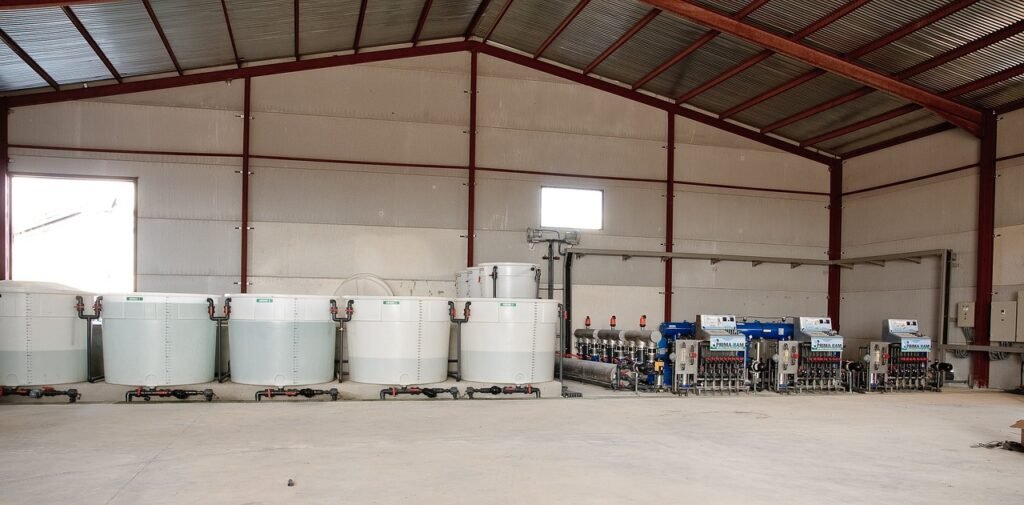
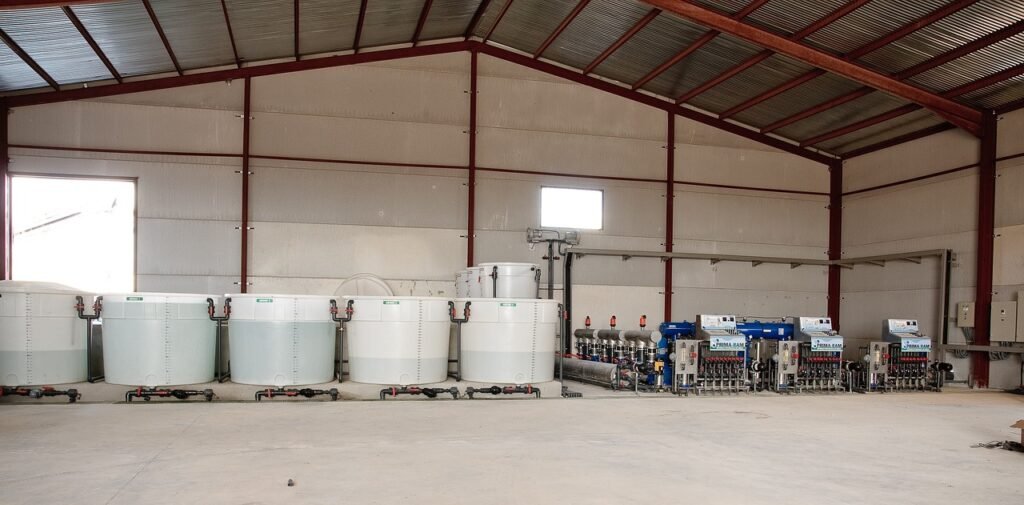
A complete intelligent fertigation system consists of four core functional modules: water filtration and purification unit, precision fertilizer injection unit, intelligent control unit, and pipeline delivery unit, forming a closed-loop automatic regulation system without manual intervention. The entire working process is scientific, standardized, and efficient.
In the first stage, the water filtration unit purifies irrigation water from wells, rivers, and reservoirs. Multi-stage filter devices intercept sediment, suspended impurities, and floating debris in the water, preventing pipeline blockage and emitter clogging, which ensures the stability and smoothness of the entire irrigation system. In the second stage, the precision injection unit mixes concentrated fertilizer stock solution with purified irrigation water evenly. Professional systems adopt multi-channel independent injection to realize the proportional matching of multiple nutrients, avoiding single nutrient deficiency or excess.
In the core control stage, high-precision sensors collect real-time data including soil moisture, solution EC/pH value, ambient temperature and humidity, and transmit data to the cloud control terminal. The system compares real-time monitoring data with preset crop growth parameters, automatically adjusting fertilizer injection speed, water flow, and irrigation duration to match the exact growth needs of crops. After each irrigation cycle, the system will automatically flush the pipeline to prevent fertilizer crystallization and residual blockage, ensuring long-term stable operation of the equipment.
Challenges and Considerations in Fertigation
While fertigation brings revolutionary improvements to modern agriculture, it still has practical challenges and key considerations in actual promotion and application, which are critical for farmers to avoid losses and maximize benefits. The first challenge is equipment quality differences. The market is flooded with low-cost inferior fertigation devices with inaccurate dosing, serious data drift, and poor anti-clogging performance. Using such equipment cannot achieve precise fertigation, and may cause uneven crop growth, root burning, and yield reduction.
Secondly, unscientific parameter setting will trigger planting risks. Many growers blindly increase fertilizer concentration or irrigation frequency in pursuit of high yield, which easily leads to nutrient accumulation, soil salinization, and crop root damage. Farmers need to formulate targeted irrigation and fertilization plans based on crop types, soil texture, local climate, and growth cycles, rather than applying fixed unified modes mechanically.
Thirdly, daily standardized maintenance is indispensable. Long-term outdoor field operation will cause sensor aging, pipeline dirt accumulation, and filter blockage. Regular cleaning of filtration systems, calibration of sensors, and inspection of pipelines are required to maintain stable precision of the system. In addition, growers need to select water-soluble fertilizers with high purity to avoid impurity precipitation blocking the system. Choosing high-quality, stable equipment with reliable after-sales service is the key to long-term stable operation of fertigation systems.
Conclusion
Fertigation is no longer a dispensable auxiliary technology, but a core essential solution for modern efficient, low-carbon, and sustainable agriculture. It solves the long-standing pain points of traditional planting such as serious resource waste, high labor costs, and unstable yield and quality. By deeply understanding fertigation principles, mastering scientific application methods, avoiding operational risks, and equipping professional intelligent fertigation systems, modern farmers can realize refined, standardized, and unattended farm management, continuously improve planting return on investment, and seize the development dividend of global precision agriculture.