As global climate change intensifies and freshwater resources become increasingly scarce, traditional agriculture is facing unprecedented survival challenges. For decades, the extensive management models of “flood irrigation” and “experience-based fertilization” have not only caused severe waste of water and fertilizer resources but also triggered a series of ecological crises, including soil compaction, salinization, and groundwater pollution. Facing the pressure of global food security driven by population growth, the digital transformation of agriculture is no longer an “optional choice” but a “mandatory question” concerning the future of humanity.
The Pain Points of Traditional Agriculture: A Dual Game of Efficiency and Ecology
For the past few decades, many farm owners have still relied on manual fertilization and furrow irrigation. This model has inherent drawbacks:
- Severe Resource Waste: Statistics show that the water utilization rate of traditional flood irrigation is often less than 50%, while the loss rate of chemical fertilizers is as high as 30%-50%.
- Uneven Crop Quality: The inability to precisely control nutrient absorption by roots leads to uneven crop growth, making it difficult for fruit sugar content and appearance to meet high-end market standards.
- High Labor Costs: With rising global labor costs, planting models relying on manual inspection and operation are no longer sustainable.
Smart Fertigation Systems: The “Smart Heart” of Precision Agriculture
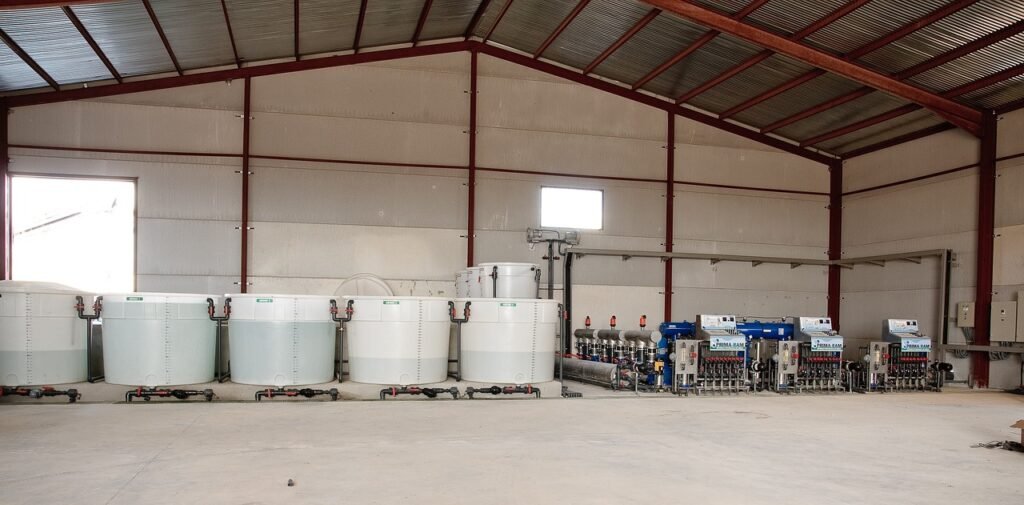
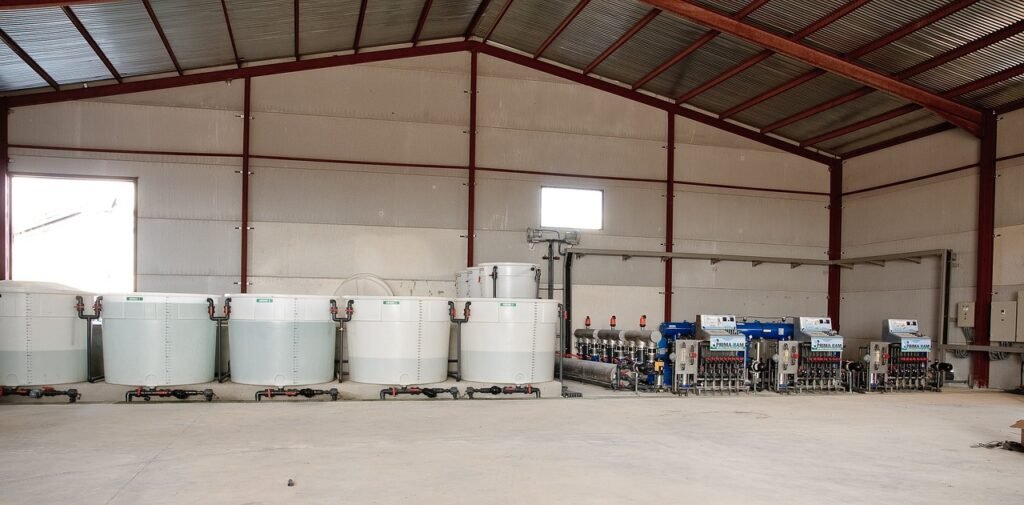
A smart fertigation system is not just irrigation equipment; it is the “smart heart” of a modern farm. It has completely overturned the inefficient traditional model of separating water and fertilizer, integrating irrigation and fertilization into one.
1. IoT Empowerment for “On-Demand Supply”
Relying on advanced IoT technology and high-precision sensors, the system can monitor soil moisture, temperature, EC, and pH levels in real-time. When sensors detect a lack of water or nutrients, the system automatically activates, mixing soluble fertilizers with irrigation water in specific proportions and delivering them directly to the crop roots through drip or micro-sprinkler systems. This “targeted” precision can help farms save over 40% in water and over 30% in fertilizer.
2. Edge Computing and AI Decision-Making
The new generation of smart fertigation systems has evolved into agricultural terminals capable of “thinking.” By incorporating edge computing, these devices can instantly analyze massive amounts of data locally and dynamically adjust the water-to-fertilizer ratio. This means that even in remote mountainous areas or places with poor network signals, farmlands can still receive the most suitable growing environment, ensuring the continuity and stability of irrigation and fertilization.
3. Remote Control: One Person Managing Thousands of Acres
Through mobile apps or computer terminals, growers can check the status of their fields anytime, anywhere. Whether it is a greenhouse or a vast open field, operations like watering, fertilizing, and spraying can be completed with a simple tap. This “unmanned” automated management significantly reduces labor costs, making agricultural production easier and more efficient.
Conclusion:a Sustainable Agricultural Future
From the desert oases of Israel to modern greenhouses in Europe, smart fertigation is sparking a “Green Revolution” worldwide. It not only helps growers significantly reduce production costs but also safeguards the Earth’s ecological bottom line while improving crop yields and quality.
Choosing a smart fertigation system is not merely about selecting an advanced piece of agricultural equipment; it is about choosing an inevitable path toward sustainable and highly profitable modern agriculture.
Irriferti is a professional manufacturer of intelligent water fertilizer integrated machines, providing water fertilizer integrated equipment and water-saving and fertilizer saving solutions worldwide. We can provide personalized customized solutions according to different countries and regions, meet the specific needs of local crops, and help farmers achieve the goal of saving water, fertilizer, and income. Contact us for customized solutions.