
1. Dilemmas of Traditional Irrigation Management for Large-scale Farmlands and Orchards
In large-scale agricultural production, open-field irrigation and orchard water and fertilizer management have long been trapped in extensive operation, high resource loss and heavy labor dependence. Staple crops such as corn and wheat mostly adopt traditional flood irrigation and manual fertilization, which suffer from severe water waste, low fertilizer utilization rate and uneven water and fertilizer supply. The water utilization rate of traditional irrigation is less than 50%, with a large amount of water lost through evaporation and soil leakage. Meanwhile, extensive manual fertilization easily causes soil compaction and nutrient loss, increasing planting costs and damaging farmland ecological environment.
In addition, traditional planting modes rely heavily on manual duty. The water and fertilizer management of ten-thousand-mu farmlands and contiguous orchards requires massive manual inspection, valve switching, fertilization and equipment adjustment. Especially during critical crop growth stages, frequent manual operations are required, which is time-consuming, labor-intensive and inefficient. Manual operations are highly subjective, making it impossible to standardize water and fertilizer ratio and irrigation duration. This often leads to uneven crop growth, unstable yield and inconsistent quality. With the continuous rise of agricultural labor costs and the shortage of high-quality labor, traditional water and fertilizer management modes can no longer meet the needs of modern large-scale planting, making agricultural cost reduction and efficiency improvement an urgent demand.
2. Digital Farm Steward: Core Logic of Unmanned Irrigation System
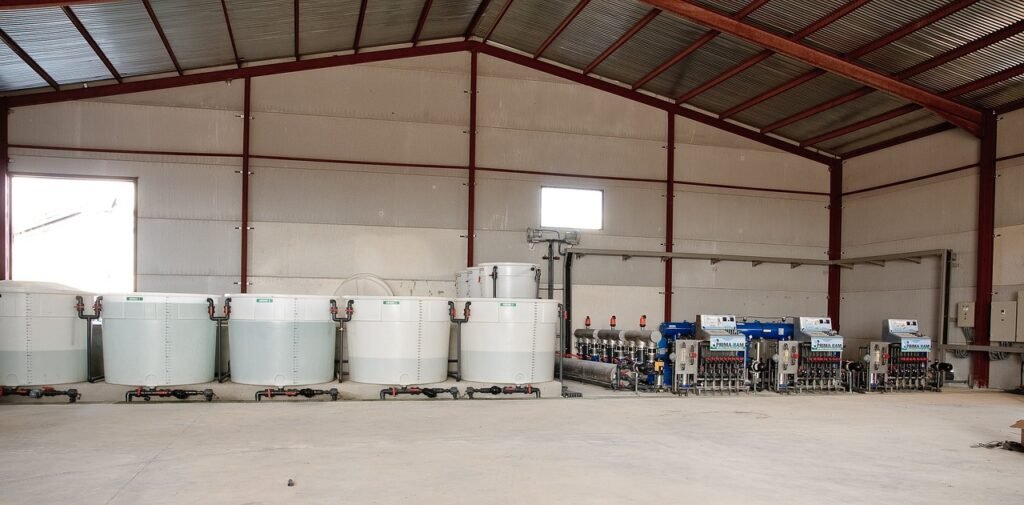
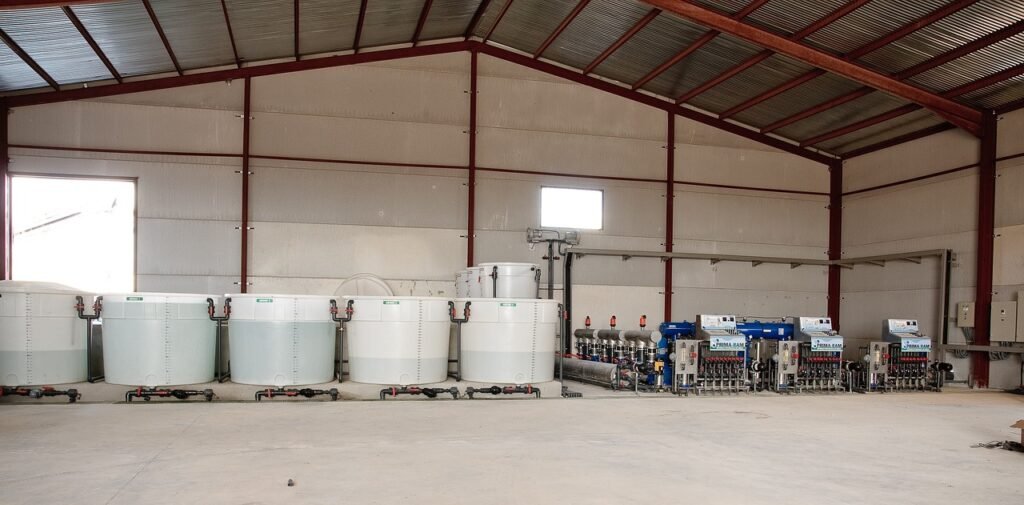
To solve the differentiated planting pain points of open-field grain crops and cash fruit trees, intelligent fertigation machines provide full-scenario adaptive unmanned operation irrigation solutions. Supported by IoT sensing technology, intelligent algorithm regulation and automatic pipeline systems, it builds a digital planting system of “data perception, intelligent decision-making, automatic irrigation and full-time unattended management”, completely subverting the traditional manual water and fertilizer management mode.
Equipped with high-precision sensors for soil moisture, nutrients and meteorological parameters, the system collects real-time data on soil water content, nutrient content, ambient temperature, humidity and light throughout the day. It intelligently analyzes the water and fertilizer demand rules of crops in different growth stages through cloud big data platforms. Customized water and fertilizer ratio schemes and irrigation plans are formulated according to the characteristics of different crops. For field crops like wheat and corn with short growth cycles, high water and fertilizer demand and concentrated irrigation frequency, as well as cash fruit trees with deep root systems, precise nutrient requirements and periodic supplementation, the system can automatically start and stop irrigation, accurately proportion water and fertilizer concentration, and adjust irrigation flow without manual intervention, realizing genuine unmanned water and fertilizer management for farmlands and orchards.
3. Scenario-based Customized Applications: Covering Field Staple Crops and Cash Fruit Trees
Intelligent fertigation machines feature strong scenario adaptability, enabling customized irrigation and fertilization modes according to the growth habits of different crops. It perfectly adapts to diversified planting scenarios including large-scale contiguous field planting, mountainous, hilly and contiguous orchards, solving the water and fertilizer adaptation problems of various crops.
For field staple crops such as wheat and corn, the system focuses on mass supply, high-efficiency water saving and balanced yield increase. It precisely replenishes water to preserve soil moisture during sowing and seedling emergence stages to improve seedling rate. In critical growth stages such as jointing and filling stages, nitrogen, phosphorus and potassium nutrients are supplied on demand at a constant speed to avoid growth weakness and yield reduction caused by nutrient deficiency. Suitable for large-scale ten-thousand-mu farmland planting, the equipment supports independent zonal regulation, realizing synchronous water and fertilizer irrigation for large-area farmlands and eliminating the uneven growth problem caused by insufficient water and excessive fertilizer in local areas.
For cash fruit trees such as apples, citrus and cherries, the system focuses on refined regulation, on-demand supplementation, quality improvement and yield optimization. Fruit trees have a long growth cycle with greatly varying water and fertilizer demands in different seasons and fruiting stages. The system intelligently memorizes the optimal water and fertilizer parameters for the whole growth cycle including germination, flowering, fruiting, fruit expansion and dormancy stages, and dynamically adjusts EC/pH values and water and fertilizer dosage. Precise water and fertilizer supply effectively improves fruit color, sugar content and shape regularity, reduces deformed and inferior fruits, and significantly enhances the commodity rate and market added value of agricultural products.
4. Verified by Practical Data: Comprehensive Water & Fertilizer Conservation and Cost Reduction
A large number of field application data prove that the intelligent unmanned fertigation system achieves stable and controllable core effects of water and fertilizer conservation, labor saving and yield increase, creating considerable economic benefits for large-scale planting. Compared with traditional manual irrigation and fertilization modes, the system achieves significant comprehensive efficiency improvement with verified core data as follows:
In terms of water resource utilization, traditional flood irrigation causes severe water loss. Adopting precise drip irrigation and micro-sprinkler irrigation modes, the intelligent equipment delivers water and fertilizer directly to the crop root zone, greatly reducing waste caused by evaporation and soil leakage. It achieves a stable40% water saving rate, with an annual water saving of 120-150 cubic meters per mu, showing outstanding advantages in water-scarce areas and large-scale field planting.
In terms of fertilizer utilization, the system precisely proportions and applies fertilizers according to real-time crop demands, avoiding fertilizer loss and soil accumulation caused by blind fertilization. It effectively improves fertilizer utilization efficiency, reduces fertilizer waste by 30%, and alleviates soil compaction and salinization to protect farmland soil fertility.
In terms of labor cost, the equipment operates automatically with unmanned operation throughout the process. It eliminates the need for daily manual inspection, manual valve switching, fertilizer proportioning and irrigation management, reducing reliance on manual labor by 80%. It greatly cuts labor management costs for large-scale planting and solves the core pain points of labor shortage and high labor costs in agriculture.
In addition, stable and precise water and fertilizer supply enhances crop stress resistance and reduces pest and disease incidence. The yield of grain crops such as wheat and corn increases by more than 15%, while cash fruits achieve dual improvement in quality and yield, significantly boosting comprehensive planting benefits.
5. Industry Value: Empowering Digital Transformation of Large-scale Agriculture
From ten-thousand-mu grain farmlands to contiguous economic orchards, unmanned fertigation technology is reconstructing modern agricultural production modes. The extensive traditional agriculture mode of “relying on nature and manual labor” is gradually being phased out, while the digital planting mode centered on precise irrigation, intelligent regulation and unmanned operation has become the core path for agricultural cost reduction, efficiency improvement and green development.
As a “digital steward” in farmlands, intelligent fertigation machines not only solve industrial pain points such as water and fertilizer waste, redundant labor and unstable yield, but also promote the transformation of field agriculture and orchard planting from experience-based management to data-driven, standardized and intelligent operation. In the context of high-standard farmland construction and smart agricultural upgrading, this unmanned irrigation solution adapts to large-scale planting scenarios in different regions worldwide. It helps global growers reduce production input, improve output efficiency, and promote the sustainable, high-efficiency, low-carbon and intelligent development of the global planting industry.