1. Core Bottlenecks of Traditional Farming in Smart Agriculture Upgrading
With the global rapid advancement of smart agriculture, smart agriculture demonstration parks and large-scale farms worldwide are facing universal planting bottlenecks. Traditional flood irrigation and manual fertilization modes feature low resource utilization, high labor dependence and unstable crop growth, forming a vicious cycle of high input, high consumption and limited yield growth.
Traditional farming wastes massive water and fertilizer resources due to evaporation, leaching and uneven manual application, causing soil compaction and salinization. Meanwhile, frequent manual inspection, irrigation and fertilization lead to soaring labor costs and inconsistent crop growth, restricting further crop yield increase. In this context, authentic fertigation case studies and practical customer testimonials have become the most credible reference for smart agriculture demonstration park transformation, providing data-driven proof for agricultural intelligent upgrading.
2. Real-world Case Analysis: Open Fields and Greenhouse Transformation Data
This article selects two mainstream planting scenarios: large-scale open-field demonstration farms and high-standard greenhouse parks. By comparing core indicators including water and fertilizer consumption, labor investment and crop yield before and after equipment renovation, it fully verifies the cost-saving and yield-boosting advantages of intelligent fertigation systems with authentic operational data.
2.1 Open-field Grain Demonstration Plot: Benchmark for Large-scale Cost Reduction and Yield Growth
A ten-thousand-mu smart grain demonstration park in Northern China mainly cultivates wheat and corn. Before renovation, it adopted traditional flood irrigation and manual fertilization, suffering from severe resource waste and stagnant yield. After fully deploying intelligent fertigation systems in 2024, the park realized fully automatic unattended water and fertilizer management with remarkable data improvements.
Historical data shows that the traditional mode consumed 320 cubic meters of water per mu annually, with a fertilizer cost of 800 RMB per mu and 25+ hours of manual labor per mu. The average corn yield was 650 kg per mu, and wheat yield was 480 kg per mu. After system upgrading, precise drip irrigation and intelligent proportioning reduced water consumption by 42% to 185 cubic meters per mu, and fertilizer utilization efficiency was significantly improved, cutting fertilizer cost by 33% to 530 RMB per mu.
In terms of labor management, the automatic 24/7 intelligent control system reduces over 80% of manual irrigation and fertilization labor, cutting annual working hours to less than 5 hours per mu. Stabilized and balanced water and fertilizer supply enhances crop stress resistance and growth uniformity. The corn yield increased to 745 kg per mu, and wheat yield exceeded 560 kg per mu, achieving an overall grain yield increase of over 18%. Verified by long-term operational benefits, the project achieves afull investment payback period of 1.5 years, delivering outstanding economic returns for large-scale grain planting.
2.2 High-end Greenhouse Demonstration Park: Model for Cash Crop Quality Improvement
A high-standard southern smart agriculture greenhouse park focuses on high-value cash crops such as tomatoes, cucumbers and premium flowers, which require extremely precise water and fertilizer management. Previously adopted semi-automatic irrigation relied on empirical manual adjustment, resulting in fluctuating EC and pH values, frequent fertilizer damage, uneven fruit development and low commodity rates.
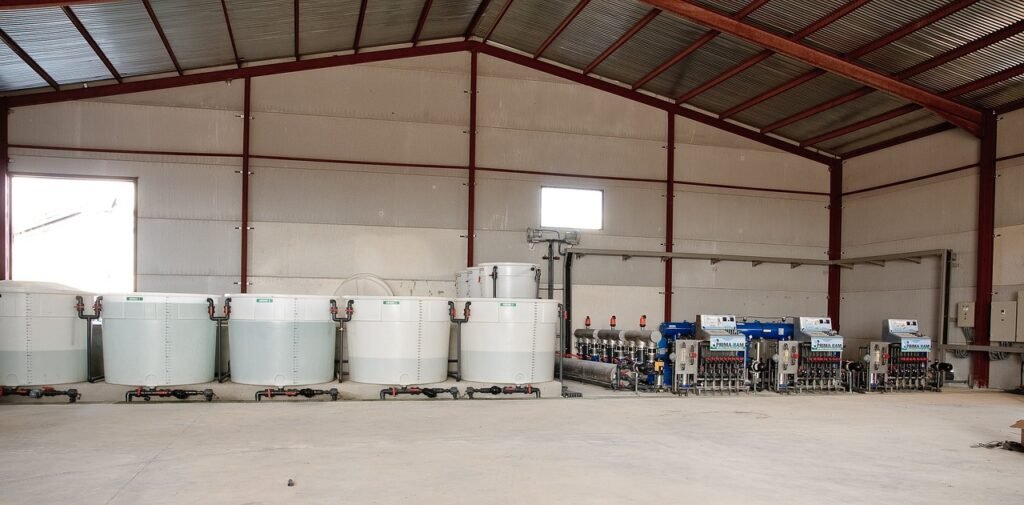
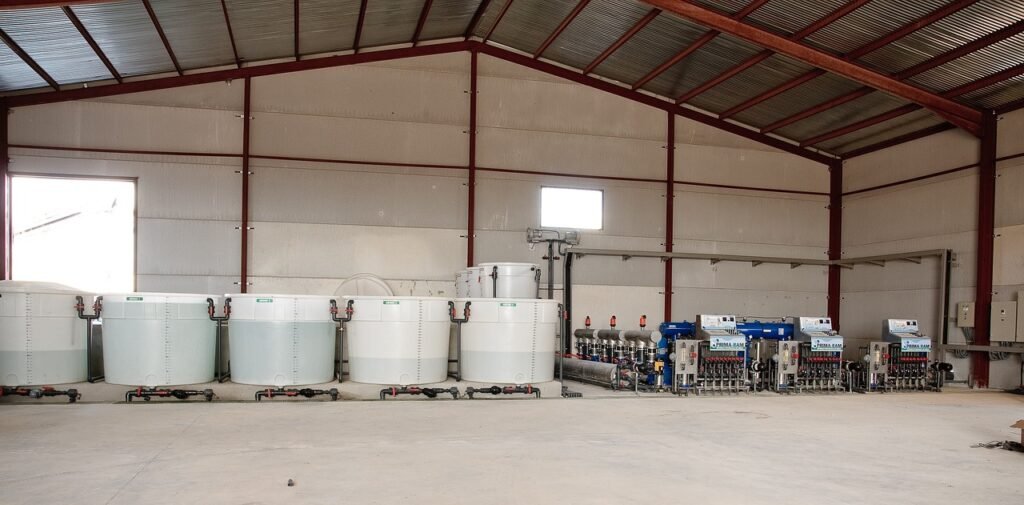
After deploying intelligent fertigation equipment, the system collects real-time soil moisture and crop growth data via high-precision sensors, and dynamically adjusts water and fertilizer parameters through closed-loop control to match crop demands in different growth stages. Practical monitoring data proves that the greenhouse park achieves 38% water saving and 30% fertilizer saving. The crop qualified rate rises from 72% to over 95%, with vegetable yield increased by approximately 25%. Improved fruit uniformity and sweetness further raise market prices by 15%-20%.
Supported by cloud remote control, automatic early warning and unattended operation, the system eliminates full-time on-site management, greatly reducing labor salary and training costs. With comprehensive benefits from cost reduction, yield growth and quality upgrading, the greenhouse project maintains a stable ROI cycle of 1.5 to 2 years, becoming a classic industrial benchmark among authoritative fertigation case studies.
3. Core Industrial Value: Quantified Long-term ROI Analysis
Verified by multiple operational smart agriculture demonstration park projects, intelligent fertigation systems deliver stable and replicable value in cost reduction, yield improvement, quality upgrading and labor saving. Precise on-demand irrigation and fertilization eliminate blind resource waste, realizing long-term water and fertilizer cost optimization.
Unattended intelligent operation fundamentally solves the industry pain points of labor shortage and high labor costs. Scientific water and fertilizer supply optimizes crop growth conditions, reduces pest and disease incidence, lowers pesticide dependence, and realizes dual improvement of crop yield and commodity value. Massive customer testimonials prove that both field grain crops and greenhouse cash crops achieve over 20% annual growth in comprehensive planting benefits after system upgrading, breaking the long-term yield bottleneck of traditional agriculture.
4. Global Scenario Adaptability: Empowering Worldwide Agricultural Upgrading
Currently, this intelligent fertigation solution has been widely applied in global agricultural scenarios, covering open farmlands, commercial orchards and intelligent greenhouses across diverse climate zones and soil conditions. It supports customized smart irrigation strategies for grain crops, cash crops and seedlings, adapting to both large-scale extensive planting and high-precision refined cultivation.
For global growers and agricultural parks, the 1.5-year short payback period, sustainable yield growth and low maintenance costs make fertigation systems a high-return essential investment for smart agricultural transformation. With verified real-case data and stable practical benefits, the solution effectively solves traditional farming pain points and boosts sustainable agricultural development. Global agricultural investors and planters are welcome to inquire for tailored solutions to achieve efficient and profitable modern planting.